.png)

Your First Charleston Fly Fishing Charter: What to Expect
Booking a fly fishing charter can be intimidating if you’ve never done it before.
Do I need to be an experienced fly caster?
Should I bring my own rod?
How far do I need to cast?
What happens if I’ve never caught a redfish?
These are questions I hear regularly from clients.
The good news is that you don’t need to be an expert to experience fly fishing in Charleston.
Here’s what a typical day with Tailfin Expeditions actually looks like.
The Trip Starts Before We Leave the Dock
One of the biggest misconceptions about guided fishing is that every trip follows the same schedule.
That’s not how I approach Charleston.
The tide plays such an important role in our fishery that departure time and fishing location can change depending on the conditions.
I’m looking at several factors before your trip:
The goal isn’t simply to spend a certain number of hours on the boat.
The goal is to put you in the best possible position during the best part of the fishing window.
What Are We Fishing For?
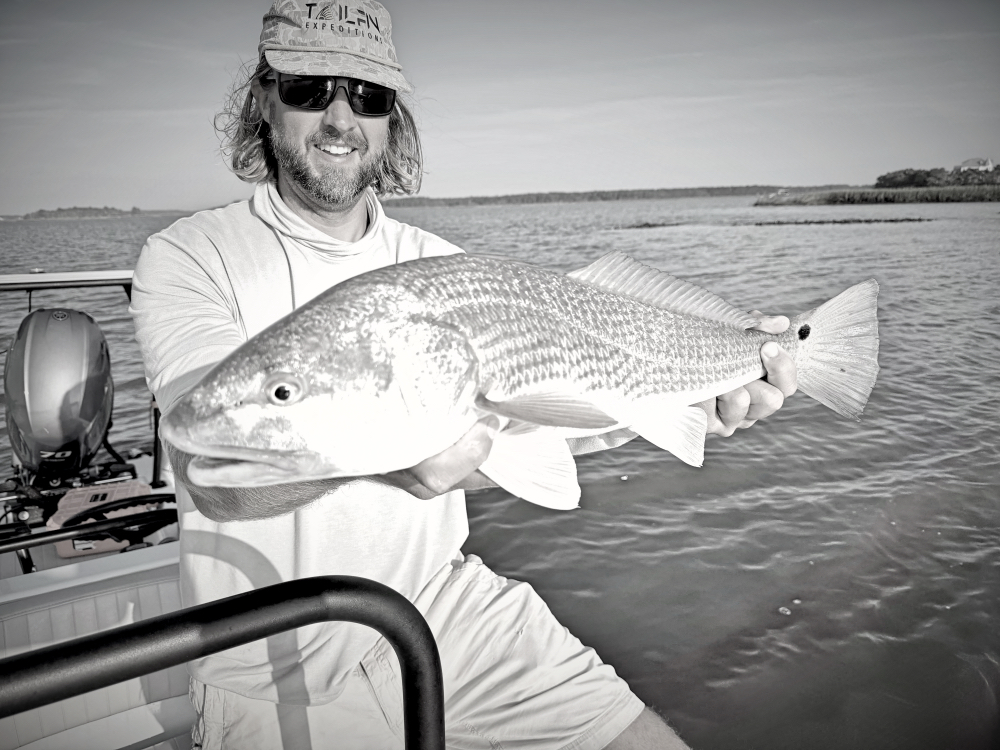
Redfish are the primary target on most Charleston fly fishing charters.
They’re perfectly suited to our fishery.
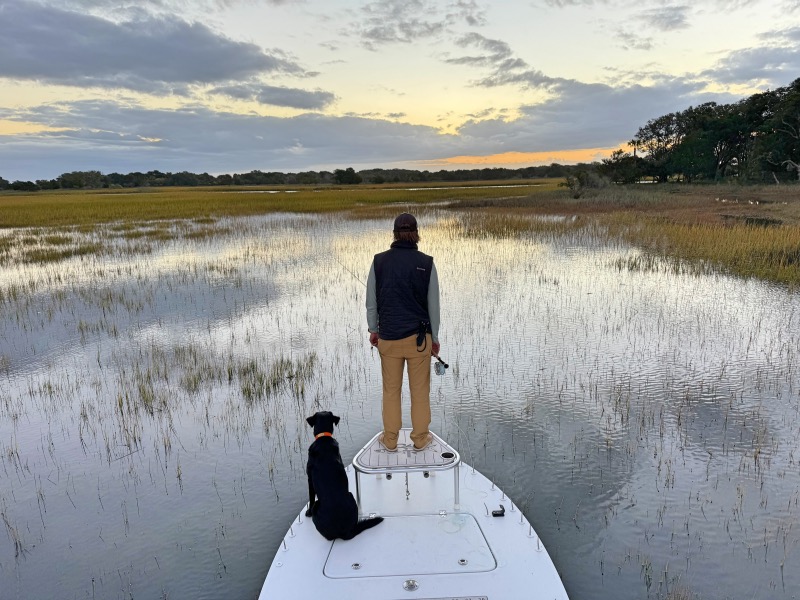
Redfish regularly move into extremely shallow water, which allows us to pole the skiff quietly and actually hunt for individual fish.
Depending on the season, we might encounter singles, small groups, large winter schools or tailing fish in flooded spartina grass.
There are also opportunities for other species including speckled trout and seasonal species such as tarpon.
But if you’re coming to Charleston specifically to sight fish with a fly rod, redfish are usually the main event.
How Much Fly Fishing Experience Do You Need?
You don’t need to be an expert.
I’ve had plenty of anglers catch their first redfish on fly during a guided trip.
However, there is a difference between learning to fly cast and learning to saltwater fly fish.
If you’ve never held a fly rod before, we can absolutely work on casting.
But if you can practice before your trip, you’ll increase your opportunities dramatically.
The most useful practice isn’t making extremely long casts.
Put a target in your yard at 30, 40 and 50 feet.
Practice picking the line up and delivering the fly to that target with one or two false casts.
Then practice doing it from different angles.
That’s much closer to what happens on the bow of a flats skiff.
Sight Fishing Is Different
When most people picture fishing, they imagine casting repeatedly until something bites.
Sight fishing is different.
There may be long periods where you aren’t casting at all.
We’re looking.
I’m poling the boat while we scan the water for movement — a wake, a push, a shadow, a copper flash or the unmistakable tail of a feeding redfish.
Then suddenly you’ll hear something like:
“Redfish. Eleven o’clock. Forty feet. Moving left.”
That’s when everything happens quickly.
You need to find the fish, make the cast and put the fly where it needs to be.
That’s what makes this style of fishing addictive.
You’re not wondering what’s underwater.
You’re watching the entire thing happen.
How Far Do You Need to Cast?
I’d rather have an angler who can accurately cast 40 feet than someone who can occasionally cast 80.
Accuracy matters more than distance.
A lot of Charleston redfish opportunities happen surprisingly close to the boat.
The challenge is getting the fly there quickly and quietly.
Wind also matters.
Being able to adjust your cast to different wind directions is one of the most useful saltwater fly fishing skills you can develop.
What Gear Should You Bring?
You don’t need to bring fishing equipment unless you want to.
Tailfin Expeditions provides rods, reels, flies and the terminal tackle necessary for the trip. Fishing licenses are also provided for guided trips.
What you should bring is pretty simple:
Polarized sunglasses, sunscreen, weather-appropriate clothing and anything you’d personally like to eat or drink.
Good polarized glasses are particularly important.
Sight fishing is a visual game.
What Happens When We Spot a Fish?
This is where guide and angler start working together.
I’ll position the boat and tell you where the fish is.
Instead of saying “over there,” I’ll usually use the face of a clock.
Twelve o’clock is directly off the bow.
Nine is left.
Three is right.
I’ll give you direction and distance and, when possible, tell you which way the fish is moving.
Your job is to make the cast.
Once the fly lands, I’ll help you with the retrieve based on how the fish reacts.
Sometimes the fish charges the fly.
Sometimes it follows.
Sometimes it completely ignores it.
That’s sight fishing.
You get to see the fish make the decision.
What If You Miss?
You will.
So will I.
Everyone does.
You’ll cast behind fish.
You’ll cast too far.
You’ll put a perfect fly six inches in front of a redfish and somehow watch it swim directly past without eating.
That’s part of the game.
The goal isn’t perfection.
It’s creating enough good opportunities that eventually everything comes together.
And when a redfish turns, accelerates toward your fly and you watch it eat, you’ll understand why people become obsessed with this style of fishing.
Half-Day, 3/4-Day or Full-Day?
This depends heavily on your goals.
A half-day can be great for anglers looking to experience the fishery without committing an entire day.
Longer trips give us more flexibility.
More time means we can potentially fish different stages of the tide, move between areas and wait for conditions to develop.
For experienced fly anglers specifically focused on sight fishing, that flexibility can be valuable.
Ready to Experience Charleston Fly Fishing?
Charleston is an incredible place to learn saltwater fly fishing.
You’re standing on the bow of a technical skiff surrounded by spartina marsh, looking for redfish in water sometimes barely deep enough to cover their backs.
It’s much closer to hunting than traditional fishing.
And that’s exactly why I love it.
If you’re planning a trip to Charleston and want to spend a day sight fishing the Lowcountry, get in touch with Tailfin Expeditions. We’ll talk through your experience level, the time of year you’re visiting and the kind of fishing you’re looking for before deciding on the best trip.


A deposit of $200 will be required to hold your dates. Deposits are refundable up to 7 days prior to your trip or if the weather does not allow us to get out. Payment in full is due the day of the trip. Cancellations within 48 hours of the trip are subject to full payment. Acceptable forms of payment include; credit/debit card, Venmo, check or cash.
Book Your Trip Now