.png)

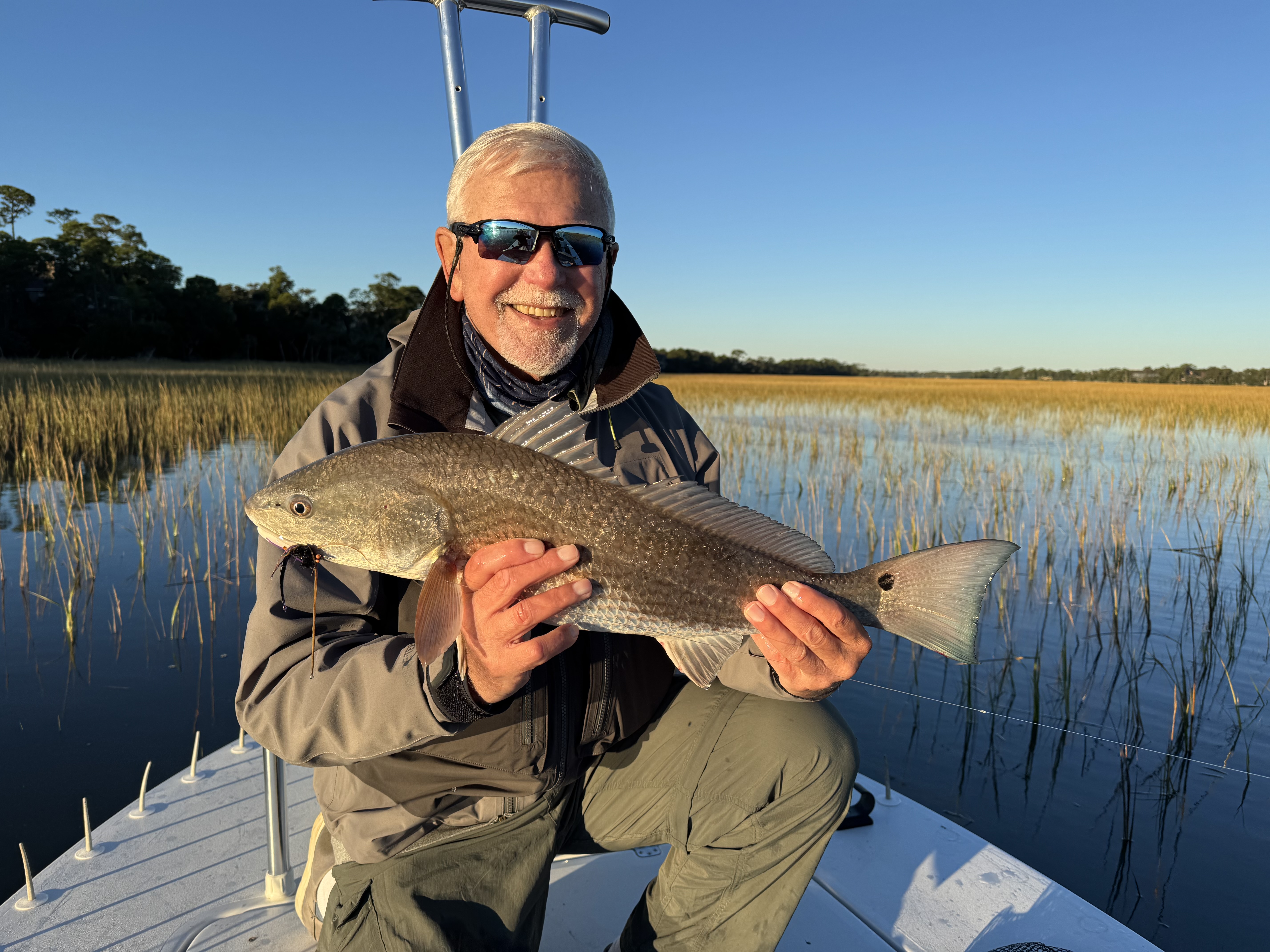
Winter fly fishing in Charleston, SC is a different pace than spring and summer. The marsh grass goes brown, the boat ramps get quiet, and the water often cleans up enough that the game turns into what most fly anglers actually want: seeing redfish and making the right shot.
This guide is written for folks researching a winter trip to Charleston and trying to figure out what’s realistic. No “secret spots,” no fluff—just how winter redfish behave here, how to plan around tides and weather, what to throw, and how to stack the odds in your favor.
The Lowcountry is one of those places where redfish are still on the menu when a lot of the country is scraping ice off windshields. Winter is a strong season for one main reason: patterns tighten up.
When water temps drop (a common “winter is here” threshold is when water dips under the mid-60s), redfish don’t roam as randomly. They’re still feeding, but they’re far more likely to move in groups and use predictable travel lanes. That’s a big deal for sight fishing.
Winter also tends to reduce floating grass and summer haze in the water, and fewer boats means fewer wakes and less pressure. The tradeoff is that winter reds can be spooky in clear, shallow water—and cold fronts can shorten feeding windows.
Charleston winters are generally mild, but they’re not “always warm.” A typical January day often sits around highs near 59°F and lows near 43°F, with the cool season running roughly December into early March.
On the water, what matters most is not the air temp, it’s the water temp trend. A hard front can drop water temps fast, and that changes how willing fish are to chase. You can even see current harbor water temps posted in the marine forecast (often mid-50s in winter stretches).
If you’re traveling, don’t fear wind—just plan for it and expect that the best shots might come in protected water.
I’m going to keep this “Charleston-real” and “visitor-helpful,” not “internet treasure map.”
In winter, Charleston redfish are often found around:
A common winter approach in the Lowcountry is focusing around lower stages of the tide because fish are easier to locate and track when there’s less water for them to disappear into.
Winter schools can be big. You may see more redfish in one day than you’d see all summer. The downside: a tight school in skinny, clear water can act like a herd of antelope, one wrong move and the whole group ghosts you.
A simple rule: don’t rush the first shot. Get positioned, pick an “edge fish” when you can, and make the cast count.
If you’re researching winter fly fishing in Charleston, SC, here’s the honest answer: tide choice matters as much as fly choice.
You can check tide predictions for the Charleston area through NOAA (Charleston/Cooper River Entrance is a common reference station).
If you only remember one thing: plan your fishing window around seeing fish, not just catching fish.
Winter redfish will humble good casters if the approach is sloppy. In clear, shallow water, the best “skill” is not distance, it’s your decision-making.
Clear water makes noise travel and mistakes show.
If a school is sliding down an edge, don’t bomb it in the middle. Lead the direction of travel and give them room. Your goal is a natural reaction: “Oh, food,” not “Incoming mortar.”
You can absolutely do winter reds with standard saltwater gear. Keep it simple.
Clothing-wise, layering beats bulky jackets. You want to rotate your torso and cast without feeling like a stuffed sleeping bag.
If you show up with a box full of giant, flashy flies, winter will teach you manners.
Cold water often rewards a retrieve with pauses. Think “strip-strip… wait.” Watch the fish. If it tracks and flares, keep it moving slightly. If it drifts off, slow down and give it time.
Here’s a clean way to think about your day without needing local shortcuts:
Winter visitors usually make the same two mistakes: underpacking for a chilly boat ride, or overpacking and losing mobility.
You might be comfortable walking downtown in a light jacket, then feel very different running across open water in the morning. January is commonly the coldest month, so plan around that reality.
Winter is a great time to enjoy Charleston without peak-season crowds—food, history, and long walks are easier when the city has breathing room.
Always verify current rules before you keep anything. South Carolina’s current red drum update notes a 15–23 inch slot limit and a bag limit of 2 per person per day (max 6 per boat per day).
Even if you’re focused on reds, you’ll run into trout at times. SCDNR has asked anglers to be mindful about spotted seatrout, noting cold winters can impact their numbers and encouraging conservation-minded handling.
Quick handling habits that help:
Is winter good for sight fishing redfish?
Yes. There is often better visibility and more schooling behavior, with wind being the main challenge.
What tide should I aim for?
Lower stages are commonly the easiest for sight fishing because fish are easier to locate and track.
Do I need to bomb 80-foot casts?
No. Solid 40–60 foot shots with good accuracy and a quiet landing beat hero casts.
What’s the biggest mistake visitors make?
Rushing the shot into a school and blowing out the whole group.
What flies should I start with?
Shrimp and small baitfish patterns in natural tones are a safe starting point.
Can I still catch fish after a hard cold front?
Yes, but expect shorter windows and a slower, more deliberate presentation.
If you’re researching winter fly fishing in Charleston, SC, here’s the simple takeaway: winter is a sight-fishing season when you plan around tides, protect your visibility from wind, and keep presentations quiet and patient. Do those three things and you’ll feel like you’re hunting redfish instead of just hoping one swims by.


A deposit of $200 will be required to hold your dates. Deposits are refundable up to 7 days prior to your trip or if the weather does not allow us to get out. Payment in full is due the day of the trip. Cancellations within 48 hours of the trip are subject to full payment. Acceptable forms of payment include; credit/debit card, Venmo, check or cash.
Book Your Trip Now