.png)

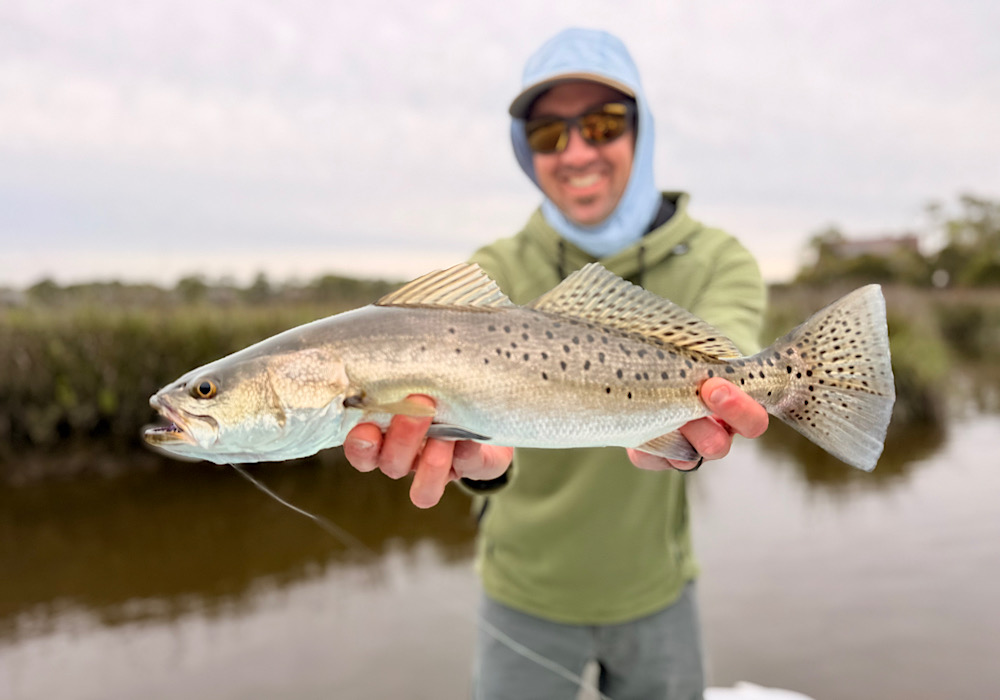
Fly fishing for speckled trout can be one of the most consistent and rewarding ways to experience Charleston fly fishing. They’re aggressive at times, willing to chase, and often found in numbers. That makes them a great target whether you’re new to fly fishing or looking to refine your approach.
At the same time, they’re not always easy. On some days they’ll eat almost anything you put in front of them. On others, they’ll follow a fly three times and never commit. The difference usually comes down to presentation, depth, and understanding how they’re feeding.
If you’re coming from spin fishing, this is where things start to change. You’re no longer just covering water. You’re controlling how the fly moves through it.
The short answer is this: find moving water with access to bait, and you’ll usually find trout nearby.
But that only gets you so far. The real key is understanding how they position themselves within that water.
Speckled trout tend to hold in places where current brings food to them without forcing them to work too hard. That usually includes:
You don’t need to fish everything you see. Focus on areas where water is actually moving and pushing bait.
Tides dictate almost everything when targeting speckled trout.
On an incoming tide, fish often push shallow, especially if bait is moving into the grass. On an outgoing tide, they’ll slide back toward deeper water, setting up along edges where food gets pulled out.
If you’re fishing slack water, you’re usually wasting your time. Even a small amount of current makes a difference.
For a detailed breakdown of how tides influence inshore species, NOAA’s tidal resource is a useful reference.
Seasonal Patterns to Keep in Mind
Understanding these shifts helps you narrow down where to start instead of guessing.
You don’t need a complicated setup to get started, but a few details matter.
A 6 to 8 weight rod is ideal for most situations. Lighter rods make it easier to cast smaller flies and handle calm conditions. Heavier rods help when wind picks up or when throwing larger baitfish patterns.
Reels are less critical. Focus on something reliable with a smooth drag.
Your fly line has a bigger impact than most anglers realize.
If you only carry one, an intermediate line gives you more versatility.
A simple leader setup works fine:
Clearer water usually means longer leaders and lighter tippet.
Instead of memorizing a long list of flies, it’s more useful to think in categories.
Shrimp are a major food source, especially in calmer conditions.
These work well when:
When trout are feeding aggressively, baitfish patterns tend to outperform everything else.
Look for signs like:
Topwater fly fishing for trout doesn’t get talked about enough.
It works best:
Even if the action is inconsistent, it’s worth trying when conditions line up.
Instead of overthinking it, run through this:
Answer those questions and your fly choice becomes much clearer.
Presentation matters more than the exact fly you’re using.
If your fly isn’t moving at the right speed or depth, trout will ignore it even if it looks perfect.
Two basic retrieves cover most situations:
If you’re not getting eats, adjust speed before switching flies.
Depth is one of the most overlooked factors.
If fish are holding deeper, your fly needs time to get down. That might mean:
A lot of missed opportunities come from fishing too shallow.
Casting across current often produces better results than casting directly into it.
Why? Because your fly moves naturally with the water instead of fighting against it.
Position matters just as much. Whether you’re wading or on a skiff, staying far enough away to avoid spooking fish is key.
If you want to improve quickly, start paying attention to what the fish are telling you.
When you see this, focus on matching what’s happening instead of experimenting too much.
You’ll know something is off when:
This usually means:
Small adjustments often fix the problem.
If you’re fishing clear water on a sunny day and trout are following but not eating, try:
These small changes can make a noticeable difference.
Most anglers don’t struggle because they lack gear. They struggle because of a few repeated mistakes.
A fast retrieve works sometimes, but not always. Slowing down often leads to more consistent results.
If you’re not paying attention to how water is moving, you’re missing the bigger picture.
You don’t need dozens of flies. A handful of well-chosen patterns is enough.
Trout require a strip set, not a traditional rod lift. Lifting the rod too early often pulls the fly away.
For more on proper fish handling and conservation practices, NOAA Fisheries provides helpful guidance.
Fly Fishing vs Light Tackle for Speckled Trout
Fly fishing isn’t always the best option.
There are days when spin gear makes more sense, especially in heavy wind or deeper water.
But when conditions are right, fly fishing offers a more controlled and engaging way to target trout. You’re not just casting and retrieving. You’re adjusting constantly based on what you see.
If you’re fishing the Charleston area, a guided trip can help shorten that learning curve. Working with a Charleston fly fishing guide gives you a better understanding of how these patterns play out on the water.
Charleston offers one of the most dynamic inshore fisheries on the East Coast. The mix of tidal creeks, flats, and estuaries creates ideal conditions for targeting speckled trout.
You’ll often find trout in the same systems as redfish and flounder, which adds variety to each trip.
Local knowledge plays a big role here. Tides, wind, and water clarity can shift quickly, and knowing where to adjust makes a difference.
If you’re planning a trip, exploring Charleston fly fishing charters can give you a better sense of what to expect throughout the year.
You can also learn more about specific areas like Folly Beach fishing charters if you want to focus on certain parts of the fishery.
A 6 to 8 weight rod works best for most situations. It balances casting ease with enough power for wind and larger flies.
Shrimp and baitfish patterns cover most situations. The right choice depends more on conditions than a specific fly name.
Yes, especially during low-light conditions. Early morning and evening tend to produce the best surface action.
Early morning and late evening are typically most productive. Midday can still work if conditions are right.
No, you can wade in many areas. A boat simply gives you access to more water and better positioning.
It can be at first. Once you understand presentation and depth control, it becomes much more consistent.
The biggest shift with fly fishing isn’t the gear. It’s how you think about fishing.
You start paying more attention to water movement, depth, and how fish are reacting instead of just casting and hoping for a bite.
Once that clicks, everything gets easier.
If you want to speed up that process, spending time on the water with someone who does it every day makes a difference. Whether you’re new to fly fishing or looking to refine your approach, getting hands-on experience can shorten the learning curve quite a bit.


A deposit of $200 will be required to hold your dates. Deposits are refundable up to 7 days prior to your trip or if the weather does not allow us to get out. Payment in full is due the day of the trip. Cancellations within 48 hours of the trip are subject to full payment. Acceptable forms of payment include; credit/debit card, Venmo, check or cash.
Book Your Trip Now