.png)

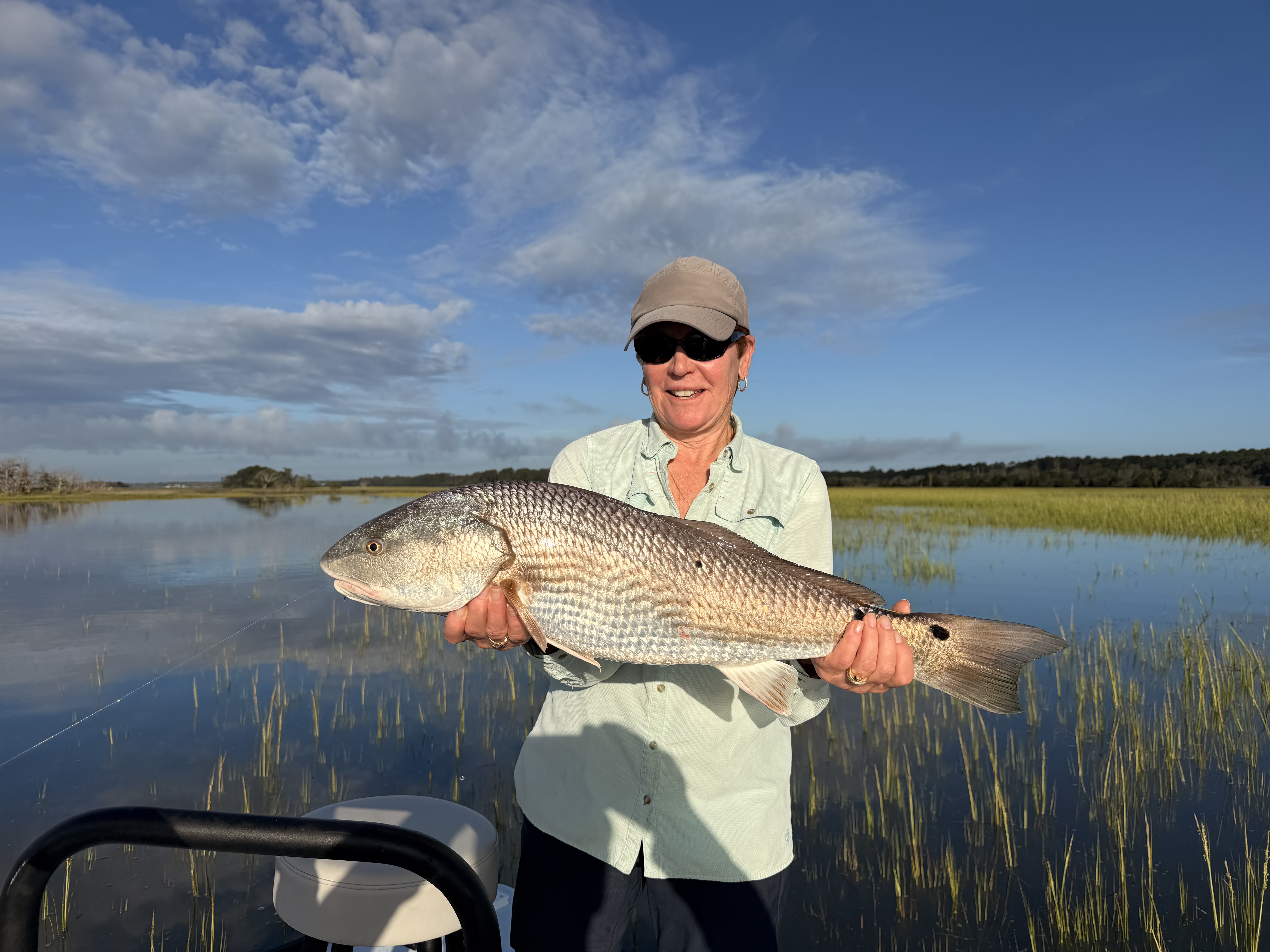
Fall Fly Fishing in Charleston: Why October & November Are So Good
There’s a lot to like about fly fishing in Charleston throughout the year, but October and November are two months I look forward to every season.
The summer heat begins to fade. Water temperatures start dropping. Bait is still abundant throughout the marsh, and redfish are feeding heavily as the Lowcountry transitions toward winter.
For fly anglers, that combination can create some of the best sight fishing of the year.
You can still find fish behaving like they did during the warmer months, while other redfish begin transitioning into the clearer-water, schooling patterns we associate with winter. Add comfortable weather and fewer brutally hot days on the poling platform, and it’s easy to understand why fall is one of my favorite times to guide in Charleston.
If you’re planning a fly fishing trip to Charleston, South Carolina, October and November deserve serious consideration.
Why Fall Fly Fishing in Charleston Is So Good
Fall in the Lowcountry is a transition season.
During summer, warm water and abundant bait allow redfish to spread throughout the marsh. As we move through October and into November, water temperatures gradually fall and conditions begin changing.
That transition affects where we find fish, how they behave and how we approach them.
Instead of being locked into one particular pattern, we can encounter several different types of fishing during the same period.
On one trip we might be looking for individual redfish cruising a grass edge. On another, we could be poling a shallow flat looking for small groups of fish. Later in the fall, larger schools begin becoming more common.
That’s one of the things I like most about Charleston fly fishing during October and November: there are a lot of different ways to find redfish.
October Fly Fishing in Charleston
October is one of those months when Charleston just feels good.
The intense heat and humidity of July and August begin to back off, but the marsh is still full of life.
Mullet, shrimp, crabs and other forage remain abundant, and redfish take advantage of it.
Depending on the tide, we may target fish around:
For fly anglers, the objective is usually the same: find fish shallow enough that we can see them before we make the cast.
October Flood Tide Fishing
October offers some of the best times to target one of Charleston’s most iconic fish: a tailing redfish in flooded spartina grass.
During sufficiently high tides, water covers sections of marsh that are normally dry. Redfish take advantage of the temporary access and move onto these flats looking for crabs and other food.
When a redfish tips downward to feed, its tail may break the surface.
That’s the moment we’re looking for.
We quietly pole into position, determine which direction the fish is moving and try to put a fly in its path without spooking it.
Flood tide fishing is never guaranteed simply because the tide is high. Wind, water level, weather and the fish themselves all affect the day.
But when everything comes together, watching a redfish tail among the spartina is one of the best experiences you can have with a fly rod in Charleston.
November Fly Fishing in Charleston
November starts bringing a different feel to the fishery.
Cold fronts become more influential and water temperatures continue to decline.
One of the biggest benefits for sight fishermen is improving water clarity.
As we move toward winter, the water can become noticeably clearer. On the right day—with good sunlight and manageable wind—we can sometimes see redfish from surprising distances.
This begins the transition toward the winter sight-fishing season that makes Charleston such an interesting year-round destination.
Redfish Begin Grouping Up
During warmer periods, it’s common to find individual fish or relatively small groups scattered throughout productive areas.
As temperatures fall, redfish increasingly begin forming groups and schools.
This doesn’t happen overnight on a particular date. Weather patterns and water temperatures matter more than what the calendar says.
But November is often when the transition becomes increasingly noticeable.
Finding a group of redfish on a shallow flat can be exciting, but schooling fish present their own challenges.
When you’re casting to a single fish, you only have to fool that fish.
When you’re casting to a school, dozens of fish may be capable of detecting something they don’t like.
A poor presentation can move the entire group.
That’s why quiet boat positioning and accurate casting become so important.
Cooler Water Can Mean Better Visibility
Sight fishing is heavily dependent on visibility.
We need enough light and water clarity to identify fish before we’re too close to them.
Fall can give us some excellent conditions for doing exactly that.
Lower water temperatures and changing seasonal conditions can improve clarity in many areas of the Charleston estuary.
From the poling platform, I’m looking for much more than an obvious redfish.
Sometimes the first indication is:
A subtle push.
A flash.
A shadow moving differently from the bottom.
A wake along the grass.
A copper-colored shape.
Or several fish moving together across a shallow flat.
Once we identify them, the game changes from finding fish to getting the skiff into casting position without letting them know we’re there.
That’s the part of fly fishing for redfish that I find so addictive.
Fall Redfish Are Feeding
Another reason October and November can be productive is the amount of forage still available.
Charleston’s estuary supports shrimp, crabs, mullet and a wide range of other prey.
Redfish spend much of their lives taking advantage of those food sources.
Rather than blindly casting, sight fishing lets us watch that behavior happen.
You might see a fish pushing along a bank looking for shrimp.
Another may be rooting around oyster structure.
A redfish might suddenly accelerate into a group of bait.
Or you may see a fish tip downward and expose its tail while feeding.
Those visual clues help determine where to put the fly and how to retrieve it.
What Flies Work for Charleston Redfish in the Fall?
There isn’t one magic Charleston redfish fly.
I prefer choosing the fly based on the conditions in front of us.
Water clarity, depth, current, bottom structure and what the fish appear to be eating all matter.
Shrimp and crab patterns are staples because they imitate food redfish encounter naturally throughout the Lowcountry.
Small baitfish patterns can also be productive when fish are focused on mullet or other forage.
But fly selection is only part of the equation.
Presentation usually matters more than having the perfect pattern.
A good fly that lands quietly in the right place is generally more useful than the supposedly perfect fly landing on top of a redfish.
How Far Do You Need to Cast?
One misconception about saltwater fly fishing is that every angler needs to cast 70 or 80 feet.
That isn’t the case.
A lot of our Charleston redfish opportunities happen much closer.
If you’re preparing for a fall fly fishing trip, I’d rather see you consistently hit a target at 30 to 50 feet than occasionally throw a long cast.
Practice making the first cast count.
Put a target in your yard.
Start with the fly in your hand or a short amount of line outside the rod.
Then practice getting the fly to the target with one or two false casts.
That’s much closer to what happens on the bow of a poling skiff.
A redfish may appear unexpectedly, and sometimes you only have a few seconds to make the shot.
Don’t Ignore the Wind
October and November can bring beautiful weather, but they’re still coastal months.
Wind is part of fly fishing in Charleston.
A cold front can dramatically change conditions from one day to the next.
That’s why I recommend practicing your fly cast when it’s windy instead of only practicing on calm evenings.
You don’t need to overpower the wind.
You need to learn how to work with it.
Being comfortable casting from different angles—and being able to make a backhand presentation when necessary—can create opportunities that would otherwise be missed.
What Does a Typical Fall Fly Fishing Trip Look Like?
There really isn’t a standard trip.
That’s intentional.
I plan Charleston fly fishing charters around the conditions rather than forcing every trip into the same schedule.
Before we leave the dock, I’m considering the tide, wind, weather, sunlight, water clarity and where fish have recently been using the marsh.
We may spend part of the trip quietly poling a shallow flat.
We might move to an oyster-lined bank as the tide changes.
We could wait for water to reach the right height before moving toward a particular piece of marsh.
The objective is to be in the right type of water when the fish should be there.
That’s especially important with sight fishing.
October vs. November: Which Is Better?
I wouldn’t call one universally better than the other because they can offer different experiences.
October generally retains more of the warm-season character of the fishery. The marsh is active, bait is abundant and there can still be opportunities to target redfish in flooded grass.
November moves us closer to winter. Water temperatures fall, clarity can improve and schooling behavior becomes increasingly important.
If your dream is watching a redfish tail among green spartina, I’d lean toward planning around the appropriate higher tides earlier in the fall.
If you’re attracted to clear-water sight fishing and looking for groups of redfish on shallow flats, later fall can be particularly appealing.
Weather ultimately determines what we actually find.
Is Fall a Good Time for Beginning Fly Anglers?
Absolutely.
You don’t need to be an expert fly caster to fish for redfish in Charleston.
It certainly helps to practice beforehand, but many opportunities occur at realistic casting distances.
The most useful skills are accuracy, speed and the ability to listen to direction from the poling platform.
You might hear:
“Eleven o’clock. Forty feet. Moving left.”
Your job is to find the fish and put the fly where it’s going—not where it was when I first spotted it.
That takes practice, but it’s also something we can work on during the trip.
And if you’ve never caught a redfish on fly before, fall is a great time to try.
What Should You Bring?
You don’t need to travel with an entire collection of saltwater fly fishing gear.
Tailfin Expeditions provides the rods, reels, flies and fishing tackle needed for the trip.
I strongly recommend bringing a quality pair of polarized sunglasses.
You’ll also want sun protection, comfortable clothing appropriate for the forecast and an extra layer during the cooler part of the season.
October mornings can feel very different from November mornings, so we’ll discuss the forecast before your trip.
Why I Love Guiding Charleston in the Fall
There are days during October and November when everything that makes Charleston special seems to come together.
The air finally feels cooler.
The boat traffic begins to thin out.
You’re standing on the bow of a shallow-draft skiff while I pole across a flat.
Then something moves.
Maybe it’s one fish.
Maybe it’s twenty.
You make the cast.
The fly lands ahead of them.
A redfish separates from the group and starts tracking it.
At that point, nothing else really matters.
That’s the experience we’re looking for.
Book a Fall Fly Fishing Charter in Charleston
If you’re visiting Charleston in October or November, fall is an excellent time to set aside a morning or day to experience the Lowcountry from the water.
Tailfin Expeditions specializes in fly fishing and light-tackle charters with an emphasis on sight fishing for Charleston redfish.
Trips aren’t based around a rigid departure time or a predetermined fishing spot. We look at the tide, weather, wind and current fishing conditions and build the plan around the best opportunities available.
Whether you’re an experienced saltwater fly angler or hoping to catch your first redfish on fly, we can tailor the trip to your experience level.
If you’re planning a fall trip to Charleston, reach out with your dates. We’ll look at the tides and discuss what kind of fishing you can realistically expect while you’re here.


A deposit of $200 will be required to hold your dates. Deposits are refundable up to 7 days prior to your trip or if the weather does not allow us to get out. Payment in full is due the day of the trip. Cancellations within 48 hours of the trip are subject to full payment. Acceptable forms of payment include; credit/debit card, Venmo, check or cash.
Book Your Trip Now